

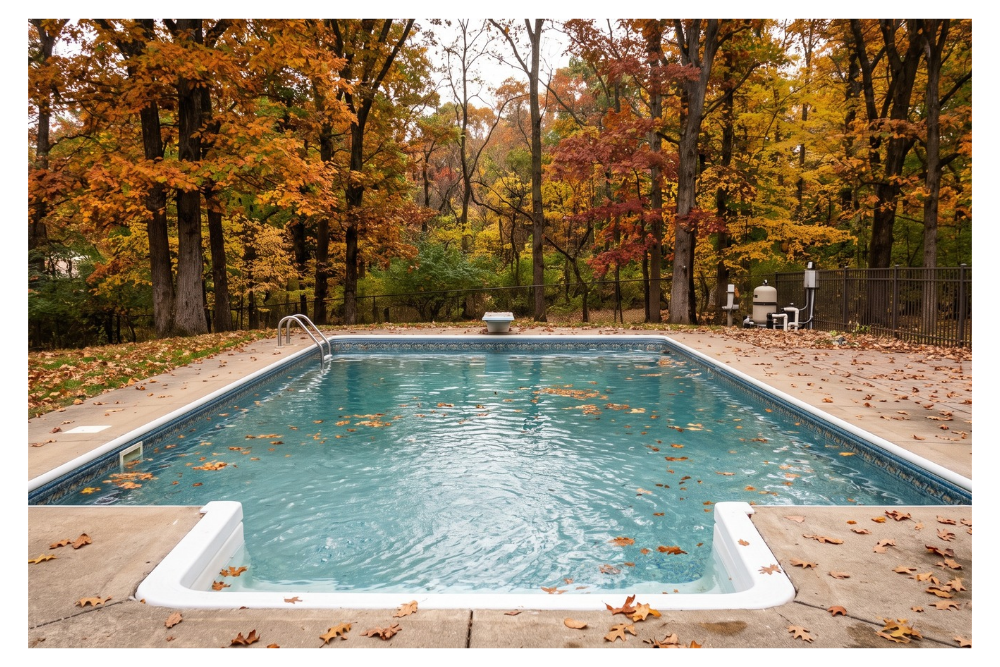
As the days get shorter and cool autumn air settles in, swimming season naturally winds down. It's tempting to flip the switch on your pool pump the moment the family stops dipping their toes in the water. After all, if no one is swimming, why pay to run the pump?
However, turning off your pool circulation before your pool is fully winterized and covered is one of the most expensive end-of-season mistakes a pool owner can make.
1. Stagnant Water is an Open Invitation for Algae
Algae blooms don't care that the water feels too cold for a swim. While cooler temperatures slow algae growth, static water combined with organic debris (like falling autumn leaves) creates a breeding ground for green, black, or yellow algae. Keeping your pump running keeps your water moving, which prevents algae spores from taking root on your pool walls and floor.
2. Uncirculated Chemicals Can't Protect Your Pool
Even if you add chlorine, algaecide, or balance products to your pool late in the season, chemicals are useless if they sit in one place. Your pump circulates water to ensure sanitizers are evenly distributed throughout the entire pool. Without circulation:
- Chlorine breaks down unevenly.
- Heavy chemicals can settle on the bottom, potentially bleaching or staining your pool liner or plaster finish.
3. Falling Autumn Debris Will Overwhelm Your Pool
Fall brings an influx of leaves, twigs, pollen, and dust. When your pump runs, your skimmers trap floating debris before it sinks to the pool floor. If the pump is turned off:
- Debris sinks to the bottom rapidly.
- Organic matter decays in stagnant water, spiking phosphates and consuming remaining chlorine.
- Tannins from leaves can cause stubborn, unsightly stains on plaster and vinyl.
4. Cold Snaps Can Freeze Uncirculated Lines
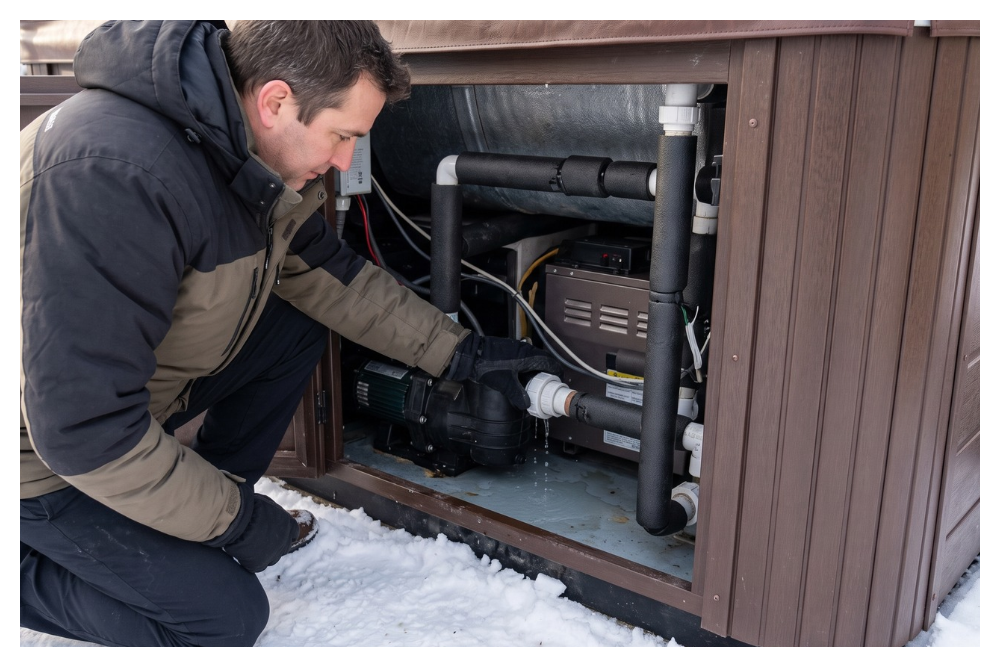
Late-season weather is unpredictable. If an unexpected freeze occurs while your pool water is static, water sitting inside exposed pipes, pumps, and filter housings can freeze and expand—leading to cracked equipment, burst pipes, and costly repairs. Running water resists freezing far better than standing water.
What Should You Do Instead?
You don't need to run your pump 24/7 at mid-summer levels, but you do need to keep it operating until your official closing day:
- Reduce Runtime: As water temperatures drop below 65°F (18°C), algae growth slows. You can safely reduce your daily filtration cycle down to 4 to 6 hours per day.
- Use Variable Speed Settings: If you have a variable-speed pump, run it on a low, energy-efficient RPM setting continuously until closing.
- Maintain Water Chemistry: Test and balance your water weekly until the safety cover goes on.
Bottom Line
Save yourself the headache of uncovering a swampy, stained pool next spring. Keep that pump humming right up until the day the cover goes on, and the pipes are safely blown out and winterized!

Laisser un commentaire
Ce site est protégé par hCaptcha, et la Politique de confidentialité et les Conditions de service de hCaptcha s’appliquent.