

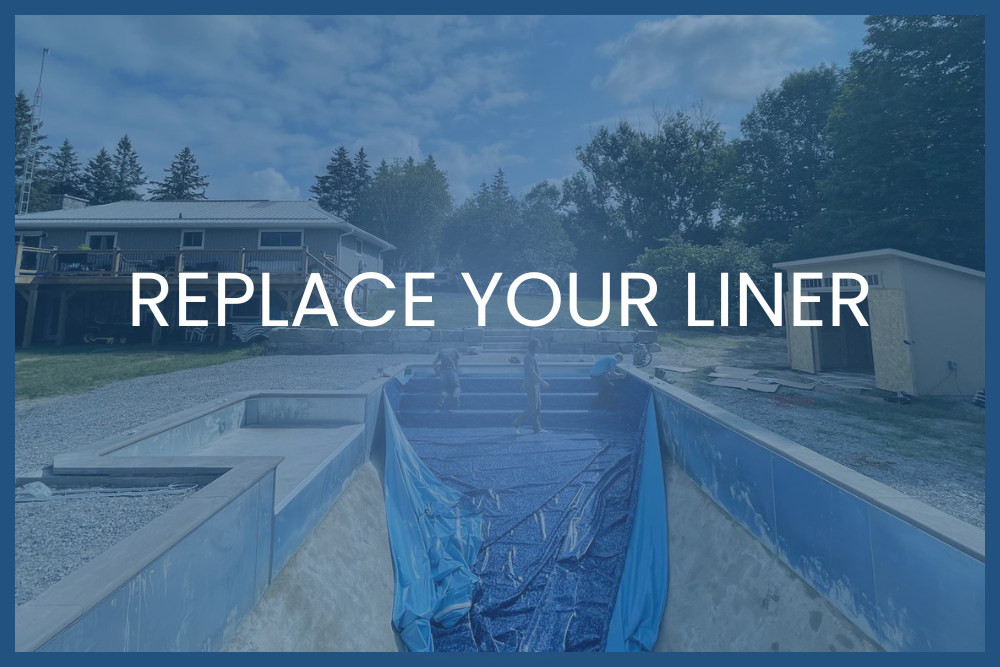
If you have a vinyl liner inground pool, you already know one thing: the liner is not “forever”. It is a wear item, and eventually it will need to be replaced.
The good news is that a liner replacement is one of the most effective ways to make an older pool look brand new again. The not-so-fun part is that most people wait until the liner fails in a big way, usually right when the weather finally turns nice.
This guide is here to help you stay ahead of that moment.
We will cover:
-
The most common signs your inground liner is nearing the end
-
What causes liners to fail early
-
Your liner pattern and thickness options (and what actually matters)
-
What the replacement process looks like, step by step
-
How to plan timing in Ontario so you are not stuck without a pool in the middle of summer
If you want to browse patterns right away, you can start here:
https://mainstreetpools.com/collections/inground-pool-liner-patterns
First: what does an inground pool liner actually do?
A vinyl liner does two jobs:
-
It holds water in the pool shell (it is the waterproof barrier).
-
It gives your pool its finished look (colour, pattern, “water colour” effect).
Under the liner is typically a base (vermiculite, sand/cement mix, or similar) and the pool walls. The liner is custom fit to your pool’s exact shape, measurements, and features.
That is why liner replacements are not a one size fits all purchase. The details matter.
How long does an inground vinyl liner last in Ontario?
There is no single perfect number, but in our area most homeowners see something like:
-
Around 8 to 12 years as a common range
-
Longer if water chemistry is consistently balanced, the pool is winterized properly, and the liner is protected from prolonged stress
-
Shorter if the pool is frequently over chlorinated, left empty or low on water, or exposed to repeated freeze-thaw issues and shifting
If your liner is getting up there in age, the smartest move is to plan the replacement before it becomes an emergency.
Signs it’s time for an inground liner replacement
Some liner problems can be repaired. Others are basically your liner telling you it is done. Here are the biggest signs we watch for.
1) Fading that looks “washed out” or patchy
All liners fade over time, especially along the waterline where sun and chemistry hit hardest. Fading alone does not always mean replacement is urgent, but it is often the first visible sign of ageing.
If the liner looks chalky, thin, or unevenly faded, it may be losing flexibility, which leads to cracking.
2) Brittleness, cracking, or “spider cracks.”
A healthy liner has some give. An ageing liner starts to feel stiff. You may see small cracks, especially:
-
On steps
-
In corners
-
Around fittings
-
Along the floor where the liner stretches
Once cracking starts, leaks are usually not far behind.
3) Wrinkles that keep coming back
Wrinkles can happen for a few reasons, including:
-
Water is getting behind the liner
-
Liner shrinkage or stretching
-
Groundwater pressure
-
Installation issues from years ago
A few small wrinkles are not always a crisis, but new or spreading wrinkles can be a sign that the liner is shifting or losing its fit.
4) The liner is pulling away from the track (bead issues)
If your liner is coming out of the track at the top edge, that is a red flag. It can happen when:
-
The liner shrinks with age
-
The pool loses water, and the liner relaxes
-
There is movement in the coping or track system
If it pops out once, it might be fixable. If it keeps happening, you are often looking at a replacement.
5) Water loss that you cannot explain
Evaporation is normal. A sudden change is not.
If you are topping up more often than usual and you cannot find a clear reason, a liner leak is one of the first things to investigate.
6) Stains you cannot remove (and they are getting worse)
Some stains can be treated. Others are “baked in”, especially if they have been there for years. If your liner is stained, faded, and showing wear, replacement is often the best way to get your pool looking clean again.
7) Multiple patches, especially near seams
A patch is not automatically bad. A liner with lots of patches, especially near seams or corners, is usually on borrowed time.
Seam issues are one of the most common end-of-life problems because seams are stress points.
What causes liners to fail early?
Homeowners often assume liners fail because they are “old”. Age matters, but a lot of early failures come from a few repeat culprits.
Water chemistry that swings hard
Vinyl does not love extremes. Common issues include:
-
Consistently high chlorine levels
-
Low pH (acidic water)
-
High combined chlorine and frequent shocking without balancing
-
High stabilizer (CYA) leading to “chasing” chlorine and over-correcting
If you are not sure where your water is at, bring a sample in. Free professional water testing is one of the easiest ways to protect a liner investment.
Letting the pool water drop too low
Vinyl liners are held in place by water pressure. If the water level drops too far:
-
The liner can shift
-
Wrinkles can form
-
The liner can shrink or pull
-
The bead can pop out of the track
Groundwater pressure (especially in spring)
In Durham Region, spring can be wet. If groundwater builds up around the pool, it can put pressure on the liner and base. That can lead to wrinkles, floating, or movement.
Poor winter closing practices
Freeze-thaw cycles are real here. If the pool is not closed properly, you can end up with:
-
Ice damage around the waterline
-
Stress on fittings
-
Shifting that shows up as wrinkles or track issues later
Liner options that matter (and the ones that do not)
When you start shopping for liners, you will see lots of pattern choices. Patterns are fun, but there are a few practical decisions that matter just as much.
1) Pattern and “water colour”.
The liner pattern affects how the water looks in your pool. A few general rules:
-
Lighter patterns often make water look brighter and more “Caribbean.”
-
Medium blues are classic and forgiving
-
Darker patterns can look dramatic and can make the pool feel deeper, but they can also show debris more easily
If you have a lot of trees, or you want a lower-maintenance look, we can help you pick something that stays looking good between cleanings.
2) Thickness (mil)
Many inground liners are commonly offered in 20 mil, 27 mil, and 30 mil options (availability depends on the specific pattern and manufacturer).
A bigger number does not automatically mean “best”, but thicker liners can offer more durability and puncture resistance. The right choice depends on:
-
Your pool shape
-
How the liner fits around steps and corners
-
Your budget
-
Whether you want a premium long term option
3) Custom fit vs standard
Most inground liners are measured and ordered to fit your pool. That is especially important if you have:
-
A deep end
-
A hopper bottom
-
Custom steps or benches
-
Unusual dimensions
This is not the place to guess.
What to expect during a liner replacement (high level overview)
Most homeowners want to know two things:
-
How disruptive is this going to be?
-
How long until we can swim again?
Here is the general flow. Exact steps vary by pool and site conditions.
-
Measure and confirm pool specs
-
Choose a pattern and confirm the liner details
-
Schedule the replacement
-
Drain the pool safely
-
Remove the old liner
-
Inspect and prep the base and walls
-
Install the new liner and set it properly (vacuum set)
-
Reinstall fittings and faceplates
-
Begin filling and monitor fit as the water rises
-
Balance water chemistry and get you swimming
When is the best time to replace an inground liner in Ontario?
If you want the simplest scheduling and the least stress, plan ahead.
In general:
-
Spring and early summer book up fast
-
Mid-summer replacements can be done, but you risk losing prime swim time
-
Late summer and early fall can be a great window if you are okay with a shorter post replacement swim stretch
If your liner is already showing warning signs, it is worth getting on the calendar before it becomes a leak emergency.

Leave a comment
This site is protected by hCaptcha and the hCaptcha Privacy Policy and Terms of Service apply.